.svg)

.png)
Types of Aid at VMI
Paying for college is easier to plan when you know how each aid type works and how to apply on time.
Most students use a combination of grants, scholarships, and loans to cover tuition, fees, housing, meals, books, and supplies. Understanding the major types of financial aid for college positions you to act decisively and build a clear plan from day one.
REMINDER: Use the Free Application for Federal Student Aid (FAFSA) every year to be considered for federal, state, and many institutional programs, then layer in scholarships and other benefits that fit your goals.
Major Types of Financial Aid
Each aid type has different eligibility rules, application steps, and renewal criteria. Start early, meet all deadlines, and keep your documents organized so you can maximize funding and minimize borrowing. By researching and understanding the types of financial aid available to undergraduate students, you can choose the options that align with your mission and reduce dependence on debt.
GRANTS
Grants are typically need-based and do not require repayment when you meet program conditions.
Pell Grant and Supplemental Educational Opportunity Grant (FSEOG): Federal grants awarded based on demonstrated financial need. The Pell Grant remains a foundational resource for undergraduates with significant need. These grants are renewable when you continue to show need, maintain Satisfactory Academic Progress (SAP), and file the FAFSA each year.
Virginia State Grant Programs: For Virginia residents who meet criteria set by the State Council of Higher Education for Virginia (SCHEV). Programs include the Virginia Guaranteed Assistance Program, Commonwealth Award, State Cadetship, and the Virginia Military Survivors and Dependents Education Program. Awards are renewable for students who continue to meet SCHEV requirements.
SCHOLARSHIPS
Scholarships do not require repayment and may be based on merit, need, leadership, athletics, service, or specific talents.
At VMI, all scholarships share one goal: expanding access to an education that develops honorable, purposeful, and capable citizen-soldiers.
VMI and Foundation Named Scholarships: More than 500 named awards funded by generous donors, often VMI alumni. These scholarships may be need-based or non-need-based and are matched to applicants by the VMI Financial Aid Office using each scholarship’s Memorandum of Understanding (MOU). No separate application is required. Awards may renew when donor preferences are maintained and funds remain available.
Merit Scholarships: Awarded and renewed based on academic performance as outlined by the Deputy Superintendent for Academics and Dean of the Faculty, the awarding academic department, or the scholarship MOU. A separate application is required for the Institute Scholars program for incoming students.
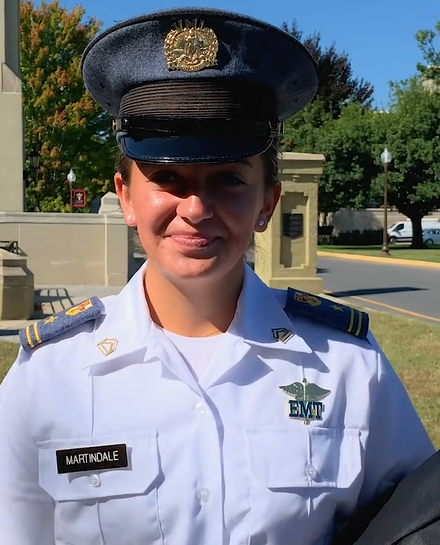
I’ve done well academically. I’ve competed athletically. I’ve found that I want to commission after graduation. I’ve become an EMT. I’ve done so much solely because I was able to stay here through the funds of the VMI scholarships.
ROTC Scholarships: Service-specific awards from the Reserve Officer Training Corps. Selection typically considers academic achievement, physical fitness, and leadership. Awards may require repayment if recipients are disenrolled and do not commission. Renewal depends on the service component’s standards. Applicants and cadets should speak directly with the ROTC units at VMI for more information, deadlines, and guidance: Army ROTC | Naval ROTC (including Marine-option) | Air Force ROTC (including Space Force
Call to Duty Scholarships: Additional VMI funding for qualified, appointed students who receive three- or four-year ROTC national scholarships prior to matriculation. These funds cover room and board (housing and food) after all other aid types, excluding loans, are applied. A separate application is required.

The goal of VMI is to give the best and brightest officers to our various service branches. Enabling them to not have to worry about the financial part of it ... is a really great thing.”
Athletic Scholarships: Initial awards are based on athletic talent as determined by each head coach. Renewals depend on performance and the discretion of the respective head coach. While the Office of Financial Aid helps to manage disbursement, we are not involved in decisions related to these scholarships.
Additional Scholarship Opportunities: The Office of Financial Aid curates a regularly updated list of one-off and limited-time scholarships from sources such as the Department of Defense, the American Association of University Women, and public and private organizations. Applicants and cadets should review this list throughout the year.
LOANS
Loans must be repaid with interest, so borrow only what you need after considering grants and scholarships. Evaluate federal student loans first because they include strong borrower protections and standardized terms. If a subsidized student loan is available, prioritize it before other borrowing.
Eligibility for subsidized and unsubsidized loans is listed on your Financial Aid offer letter. Borrowers complete a Master Promissory Note (MPN) and Entrance Counseling on the Federal Student Aid website. These are required only in the first year you borrow. Federal student loans include borrower protections such as income-driven repayment, deferment, forbearance, and potential forgiveness programs. A subsidized student loan does not accrue interest while you are enrolled at least half-time.
Available to parents of undergraduates and to graduate students, subject to a credit check. Interest begins accruing at disbursement. PLUS loans are a part of federal student loans but are credit-based and may carry higher interest than Direct Subsidized and Unsubsidized loans. Please note that there is a $20,000 annual cap per student, with a lifetime cap of $65,000.
These are offered by banks and other lenders, usually require a credit check or a cosigner, and may have variable rates and fewer repayment protections than federal options. Compare rates, fees, and repayment terms carefully and consider these only after maximizing grants, scholarships, and federal student loans. When evaluating student loans private, review total cost, interest capitalization, and borrower safeguards.
ADDITIONAL BENEFITS & AWARDS
There are a number of additional benefits and awards with a narrower scope of eligibility that may assist students as they build their financial plan for college. If you have questions, please be sure to reach out to the office so we can assist and provide additional resources as needed.
Eligible students may use Chapter 33: Post-9/11, Chapter 35, and Chapter 1606 education benefits. Awards renew based on Department of Veterans Affairs requirements and VMI’s Satisfactory Academic Progress standards. Coordinate certification early to avoid delays. Out-of-state students who utilize these benefits are charged in-state rates. Additional details and instructions are available on VMI’s Veterans Benefits page.
External scholarships and grants from civic groups, foundations, employers, and associations can reduce out-of-pocket costs. Report all outside awards to the Financial Aid Office. Total aid cannot exceed the cost of attendance or need eligibility as defined by the FAFSA. When outside funds are added, other aid may be adjusted to remain within allowable limits. Contact the Financial Aid Office with questions about how your package may change.
Cadets may qualify for the Supplemental Nutrition Assistance Program to help pay for food at authorized retailers. Review the federal SNAP website for program rules, and Virginia residents can find eligibility information on the state website. SNAP does not reduce eligibility for federal student aid.
Families may qualify for the American Opportunity Tax Credit or the Lifetime Learning Credit. Maintain records of tuition, required fees, and course materials, and consult IRS resources or a tax professional.
Financial Opportunity Outside of Direct Aid
While VMI does not have a work study program directly comparable to other colleges and universities, some offices and divisions offer part-time jobs that fit around class schedules and help VMI cadets cover personal and educational expenses while building experience. These positions are not open to freshmen (rats) so it is something to explore after your first year at VMI.
Career Services is a great place to start for more information about opportunities as they change year to year.
At-a-Glance: Aid Types and Key Points
| Aid Type | Repayment | How to Apply | Renewal Basics |
| Pell Grant / FSEOG | No | FAFSA | Demonstrated need and SAP |
| Virginia State Grants (SCHEV) | No | FAFSA; meet SCHEV criteria | Continued SCHEV eligibility |
| VMI & Foundation Named Scholarships | No | Matched by VMI; no separate application | Donor preferences and available funds |
| Merit Scholarships | No | Processed through the Dean's Office; Institute Scholars requires a separate application | Academic performance per MOU |
| ROTC / Call to Duty Scholarships | No (repayment may apply upon disenrollment) | Service component application; separate Call to Duty application | Service standards and program rules |
| Athletic Scholarships | No | Coach evaluation and offer | Coach discretion and performance |
| Federal Direct Student Loans | Yes, with interest | FAFSA; complete MPN, Entrance Counseling | File FAFSA each year; maintain SAP |
| VA Education Benefits | No | VA certification and documentation | VA requirements and SAP |
| Outside Awards | No | External applications; report to Financial Aid | Varies by sponsor; aid may be adjusted |
Frequently Asked Questions
Generally no, as long as you meet enrollment and academic requirements. Funds may be reduced or returned if you withdraw or fail to meet conditions. The Pell Grant, for example, may be adjusted if your enrollment level changes.
Yes. Schools coordinate benefits to remain within cost-of-attendance limits. Contact the Financial Aid Office and the School Certifying Official to ensure timely processing.
With a subsidized student loan, the government pays the interest while you are enrolled at least half-time and during eligible deferment periods. With unsubsidized loans, interest accrues from disbursement. Both are part of federal student loans with access to income-driven plans.
Colleges must keep total aid within your cost of attendance and need eligibility. When outside awards are added, other aid may be adjusted. Report all awards promptly to avoid over-awards.
Start as early as possible and continue each year. Track deadlines, tailor applications, and reapply for renewable awards on time.
While our office cannot make this decision for you, we strongly recommend that students review these only after grants, scholarships, and federal student loans have been exhausted. If borrowing privately, compare interest rate types, fees, cosigner requirements, and repayment safeguards.